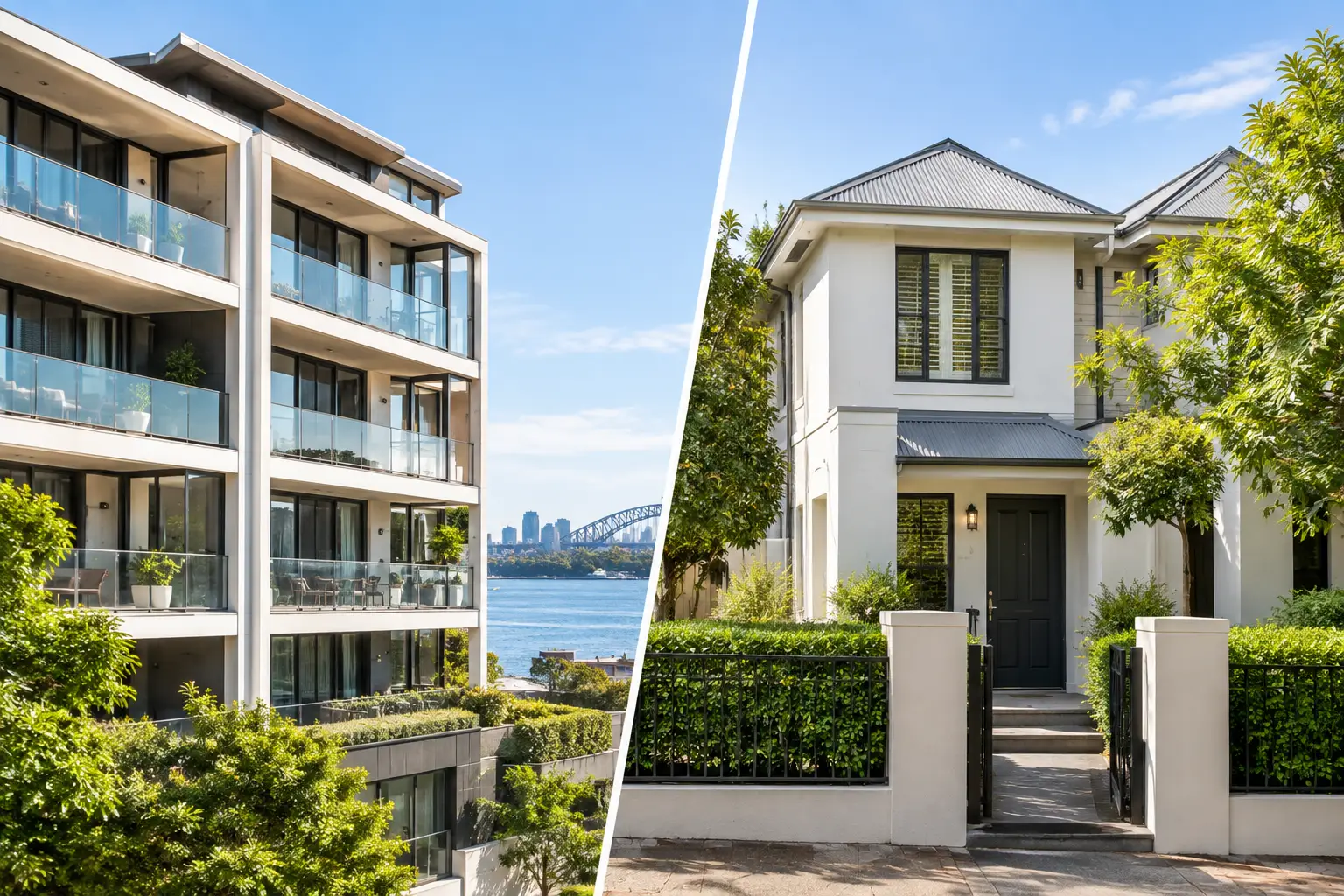
A two-bedroom apartment near a train station can put Sydney’s cafés, work hubs and harbour-side precincts within easy reach. A townhouse a little further out may offer a courtyard, an extra bedroom and room for a growing family. When weighing up apartment versus townhouse Sydney, the better choice is rarely about property type alone. It comes down to how you live now, what you can comfortably afford, and how flexible you need the home or investment to be over time.
Sydney buyers are often balancing competing priorities: proximity to the CBD, schools, outdoor space, parking, maintenance and future resale appeal. Clear priorities make the decision far less overwhelming.
Apartment versus townhouse Sydney: the essential differences
An apartment is typically one residence within a larger strata building. It may range from a boutique block of six homes to a high-rise development with shared lifts, parking, a gym or concierge services. Apartments are common in inner-city, harbour-side and well-connected middle-ring suburbs, where land is limited and transport access is highly valued.
A townhouse is generally a multi-level dwelling that shares one or more walls with neighbouring homes. It often has its own street entry, a private courtyard or balcony, and more internal separation between living and sleeping areas. Some townhouses are strata-managed, while others sit on Torrens title, which can materially change your costs and responsibilities.
Neither option is automatically better. A low-maintenance apartment can be ideal for a first-home buyer with a busy schedule, while a townhouse may suit a household that wants more room without the price and upkeep of a freestanding house.
Price is only one part of affordability
Townhouses often command a higher purchase price than similarly located apartments because they usually provide more internal space, land component and privacy. However, the price gap varies sharply by suburb. In some outer and middle-ring areas, a newer townhouse can cost less than a premium apartment in a tightly held inner-city location.
Look beyond the advertised price when setting your budget. Your ongoing expenses may include council rates, water charges, insurance, loan repayments and maintenance. For strata properties, add regular levies and allow for the possibility of special levies for major works such as waterproofing, lift upgrades or façade repairs.
An apartment with high strata fees is not necessarily poor value. A building with good administration, appropriate sinking-fund reserves and well-maintained common areas can help protect your asset. Equally, a townhouse with very low outgoings may require you to budget independently for roof, driveway, fencing and garden maintenance. The key is understanding what you are paying for and whether the property’s condition supports those costs.
Before making an offer, review the contract carefully and arrange suitable building, pest and strata reports. For apartments and strata townhouses, the strata records can reveal planned works, disputes, building defects, insurance claims and the financial health of the owners corporation.
Space, privacy and daily life
Apartments tend to offer single-level living, which can be practical for downsizers, professionals and anyone who prefers fewer stairs. A well-designed floorplan with good storage, natural light and a usable balcony can feel surprisingly generous. But layouts differ greatly. Some newer apartments trade bedroom size and storage for location and shared amenities, so inspect with your everyday routines in mind.
Townhouses usually provide clearer separation. Living areas may sit downstairs, with bedrooms upstairs, making them well suited to families, share households and people working from home. A private courtyard can be a genuine lifestyle advantage for children, pets or weekend entertaining.
That additional space also brings extra work. Gardens need attention, stairs may not suit every stage of life, and larger interiors can mean higher heating and cooling costs. If you are choosing a townhouse mainly for the courtyard, consider whether it receives usable sunlight and whether you genuinely want the maintenance involved.
Privacy is another practical distinction. Apartment living can involve noise from adjoining homes, corridors, lifts and common areas. In a townhouse, you may still share walls, but a private entrance and fewer neighbouring residences can create a more house-like feel. During inspections, visit at different times where possible. Peak-hour traffic, school pick-up activity and evening noise can change the experience of a property considerably.
Location and lifestyle in Sydney
For many buyers, an apartment is the most direct route to a sought-after suburb. It can provide access to train lines, bus routes, beaches, restaurants, universities and employment centres that may be out of reach in a house or townhouse budget. This convenience can also appeal to tenants, especially in locations where parking is less important than walkability.
Townhouses are often more available in established family precincts and growth corridors, where blocks are larger and redevelopment has created medium-density communities. They can offer a stronger sense of neighbourhood connection, room for children and easier access to local parks. The trade-off may be a longer commute or greater reliance on a car.
Think beyond the current commute. Consider childcare, schools, medical services, shopping, green space and transport upgrades planned for the area. A property that works only while your routine remains exactly the same can become restrictive sooner than expected.
What investors should weigh up
For investors, the apartment versus townhouse Sydney decision should start with tenant demand rather than personal preference. Apartments in well-connected locations can attract professionals, students, couples and downsizers seeking convenience and low-maintenance living. They may offer a more accessible entry price, allowing investors to enter a suburb with reliable rental demand.
Townhouses can appeal to families and long-term tenants who value bedrooms, parking and outdoor space. In the right location, that can support longer tenancies and reduce vacancy risk. However, a larger property may also attract higher maintenance costs, and the tenant pool can be narrower if the area is not close to schools, transport or employment.
Avoid assuming that one property type will always outperform the other. Growth is influenced by scarcity, supply, amenity, condition, buyer demand and the broader market cycle. A well-located apartment in a tightly held, low-supply block may perform very differently from a similar-sized unit in a suburb with substantial new development coming online. A townhouse’s land component can be attractive, but its value still depends on the street, layout, title structure and local demand.
A realistic investment assessment includes expected rent, vacancy periods, strata or maintenance costs, property management, borrowing costs and potential future repairs. A buyers agent, finance professional and property manager can each provide a different but useful perspective before you commit.
Questions to ask before you choose
Start with your non-negotiables. If being close to the office, a station or your favourite local precinct matters most, an apartment may give you better access for the budget. If you need a home office, a second living zone, parking and outdoor space, a townhouse may represent better value even if it means moving further from the city.
Then ask how long you expect to hold the property. A compact apartment may be perfect for the next three years but less suitable if you are planning for a child, a pet or regular work from home. A townhouse can offer more adaptability, although it may stretch the budget and limit your choice of suburb.
Finally, assess the individual property, not just the label. A beautifully maintained apartment in a quiet, well-run block can be a stronger purchase than a poorly designed townhouse on a busy road. The right home should meet your practical needs, fit your financial comfort zone and retain appeal for future buyers or tenants.
Property decisions are personal, but they do not need to be made in isolation. Taking the time to compare local sales, inspect closely and seek tailored advice can help you move forward with clarity – and choose a property that supports the life you want to build in Sydney.